
Soma - An Intentional Approach to Music Listening
by Eddy Zhang
Abstract
In the age of digital music playback, music has become increasingly accessible, but at a cost. This design-led research project explores how contemporary playback technologies have shifted listening from an embodied and sensory-rich experience to a passive activity. Algorithms and screen- based interfaces now shape our listening experience. As music consumption becomes automated and ambient, the listener’s role is reduced to that of a receiver, detached from the ritual and materiality that once defined the act of music listening.
Responding to this shift, this project investigates how design can reintroduce purposeful friction and non-visual interaction into the digital music playback experience. Drawing from theories of ubiquitous listening, digital fatigue, analog revival, and multisensory design, this research critiques the prevailing logic of convenience that has driven the development of playback technologies and proposes a more intentional, human-centred alternative. Through a design-led inquiry, it explores how tangible, rich interactions might foster aesthetic engagement, emotional connection, and a renewed sense of intentionality in everyday listening practices.
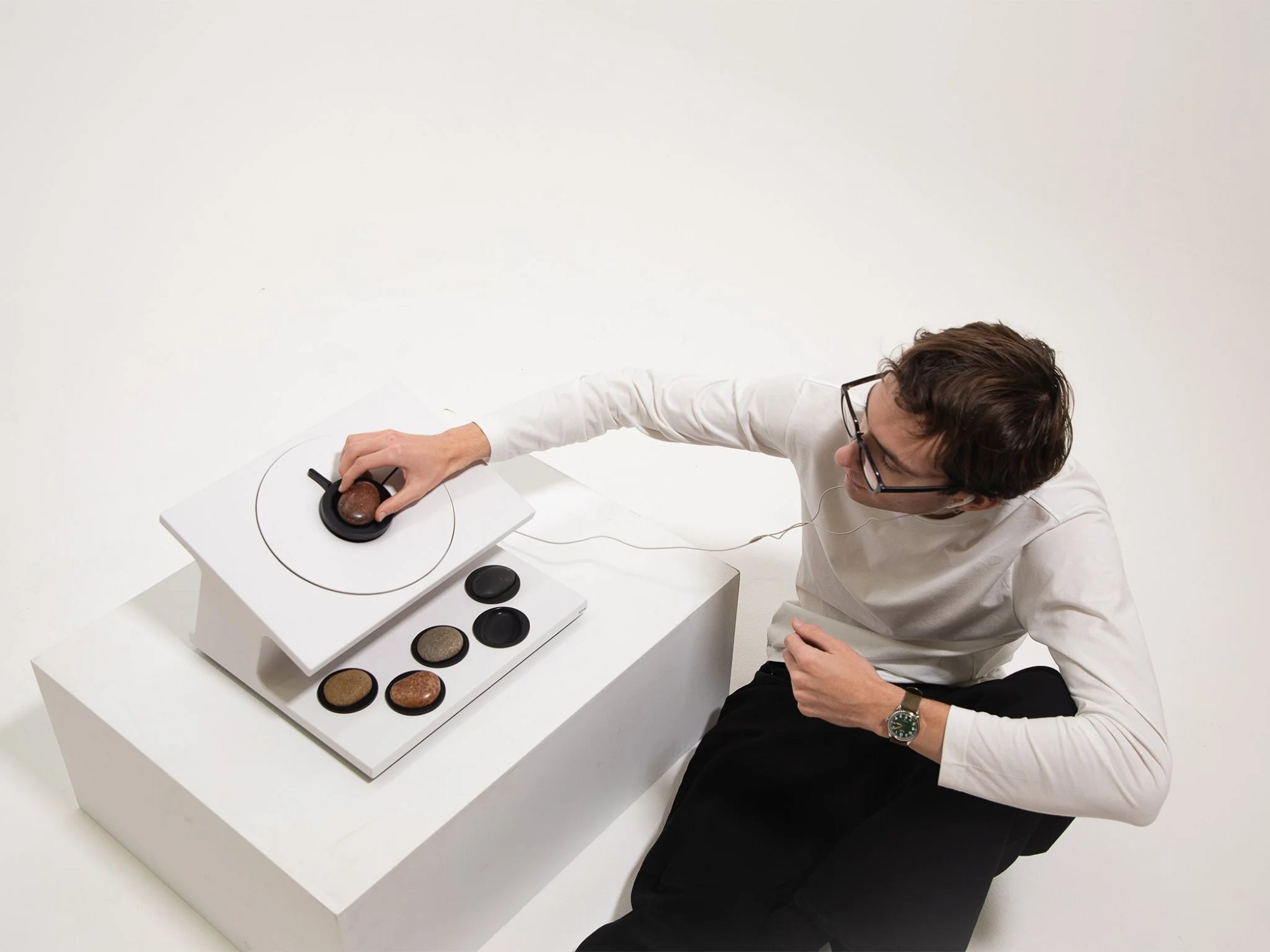
The final outcome is a playback system that introduces physical interaction into the digital music listening experience, challenging passive consumption and reframing music playback as a mindful, embodied ritual. By designing for slowness, tactility, and sensory presence, this work aims to offer a critical and alternative vision for how we might listen more intentionally in the digital age.
“Responding to this shift, this project investigates how design can reintroduce purposeful friction and non-visual interaction into the digital music playback experience. ”
Design Intent
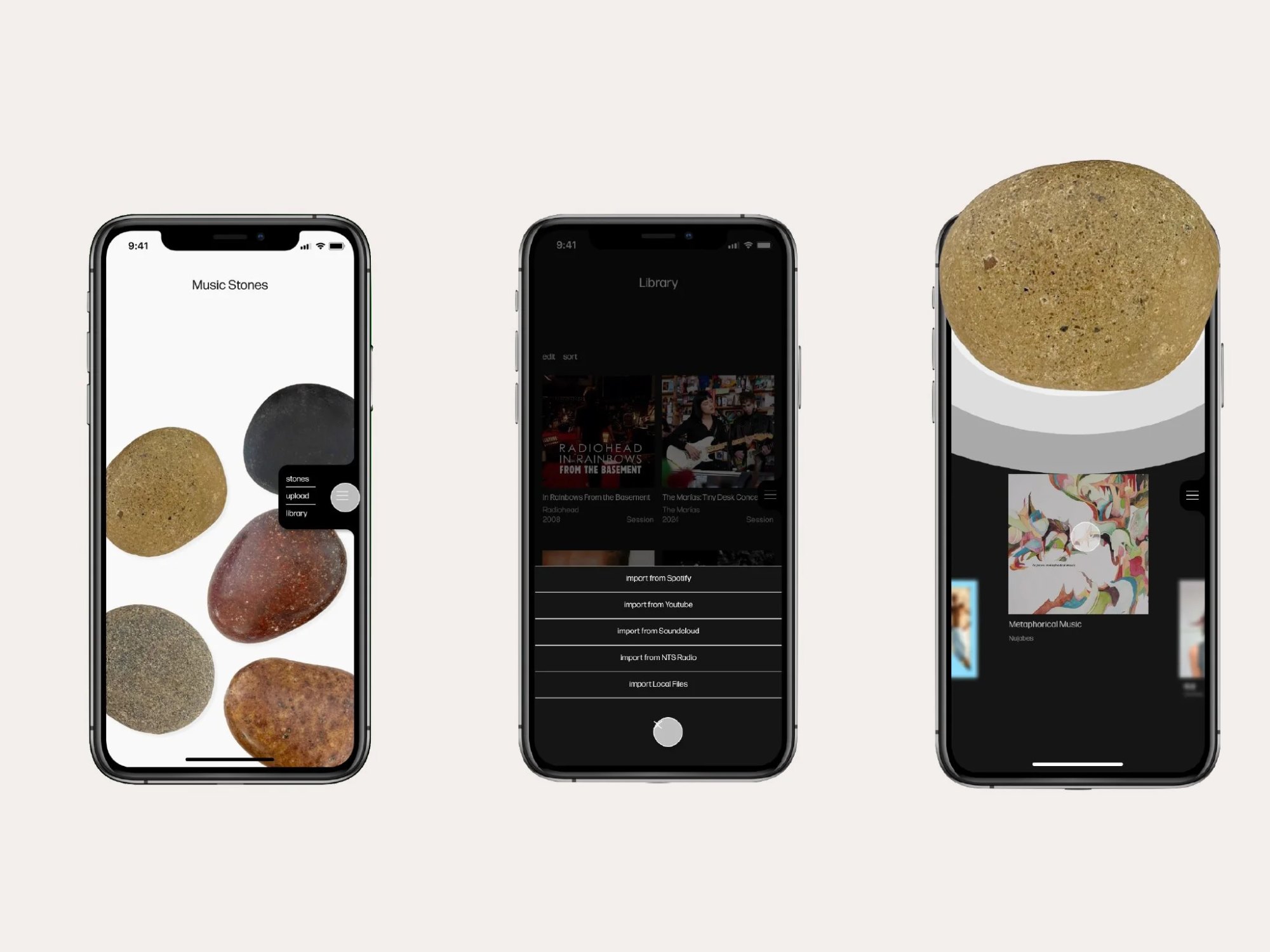
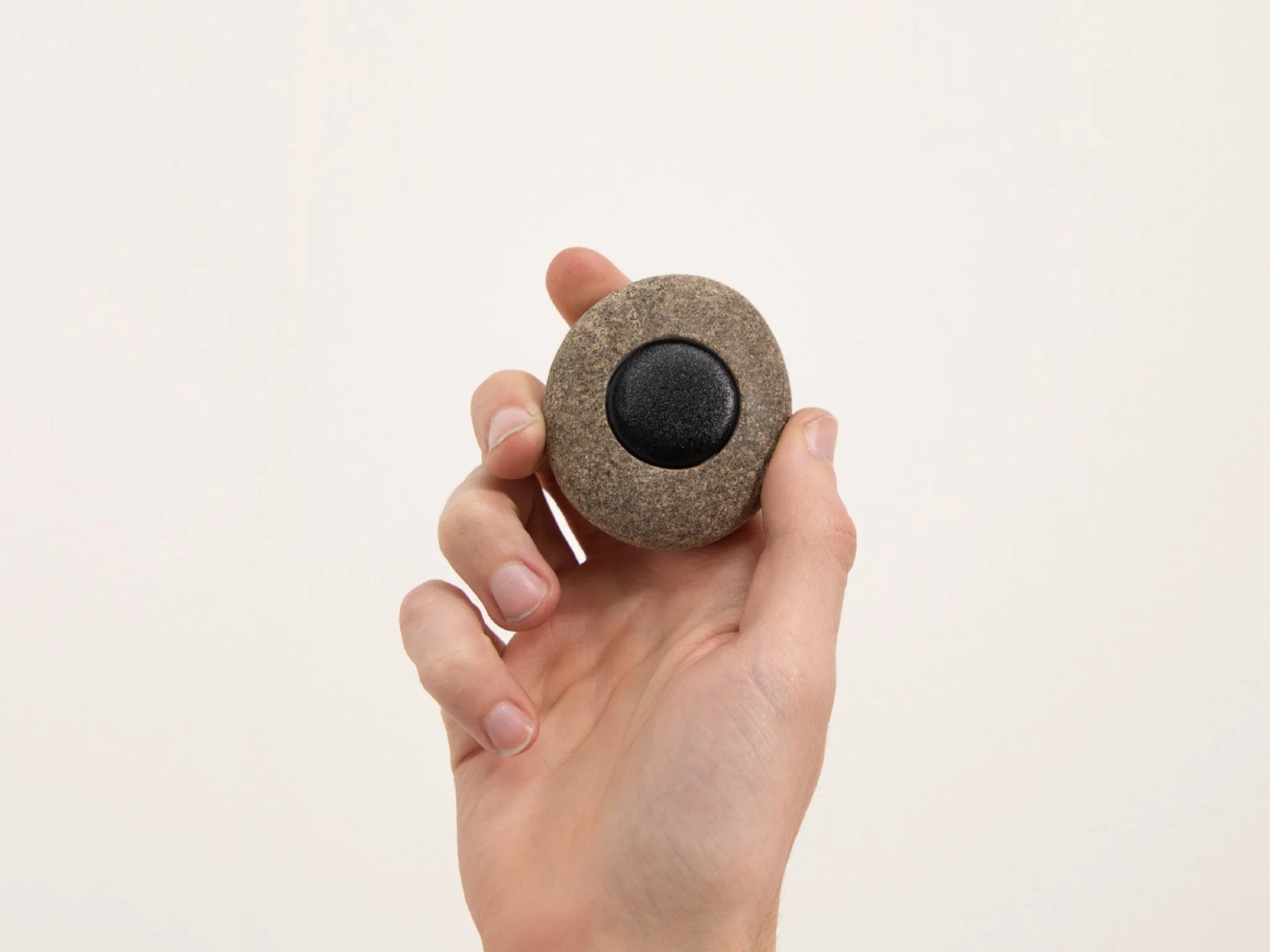
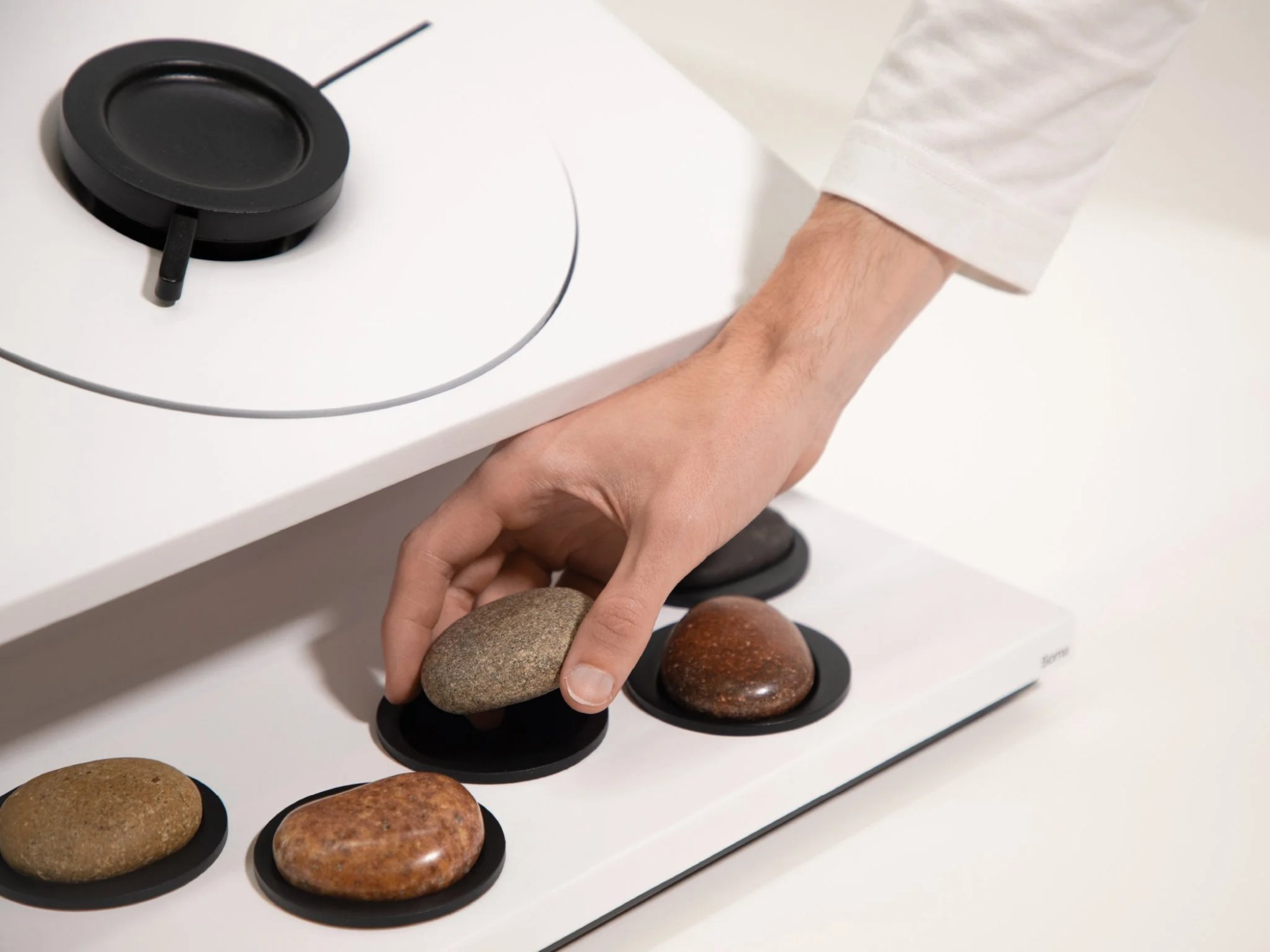
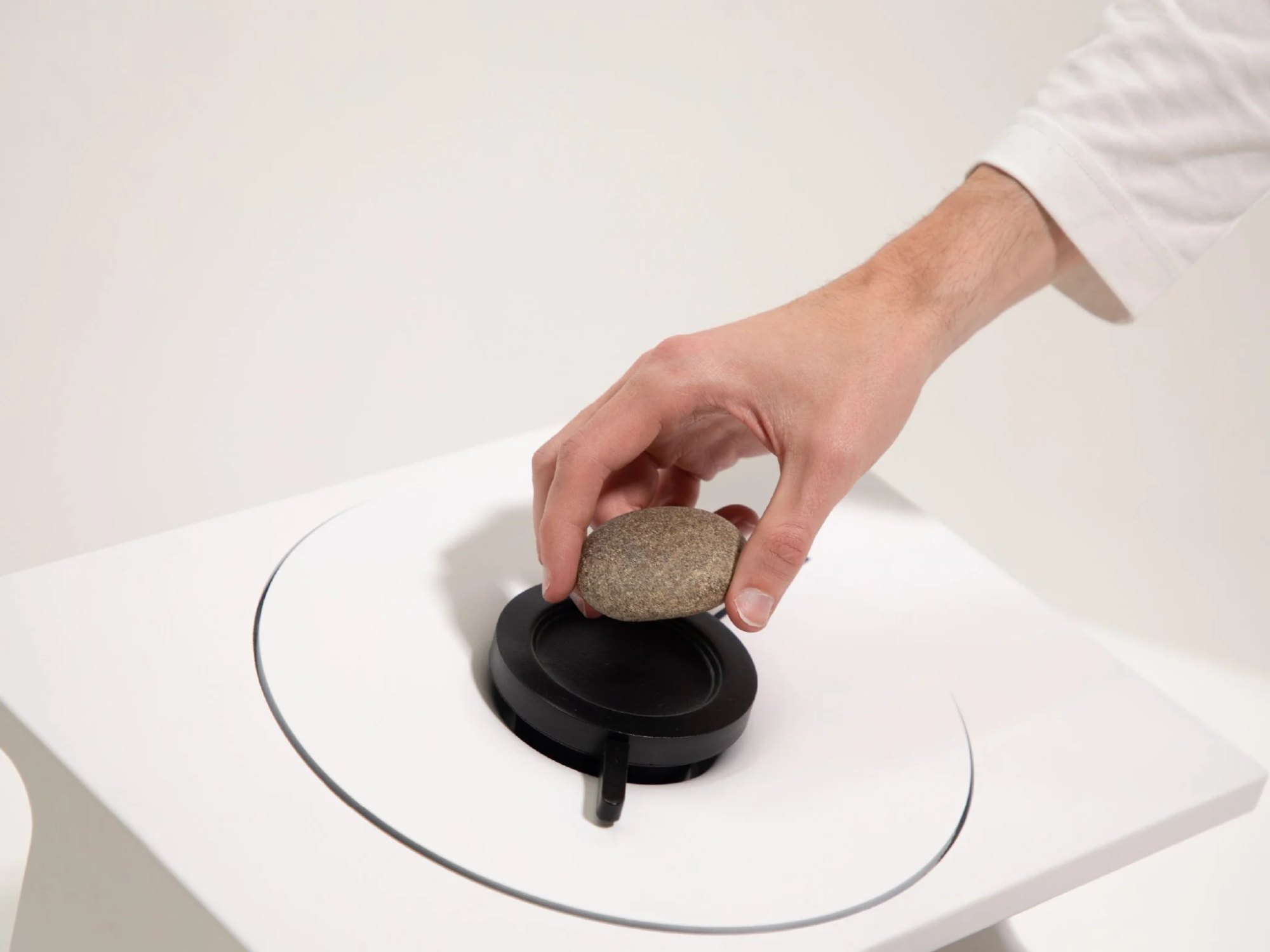
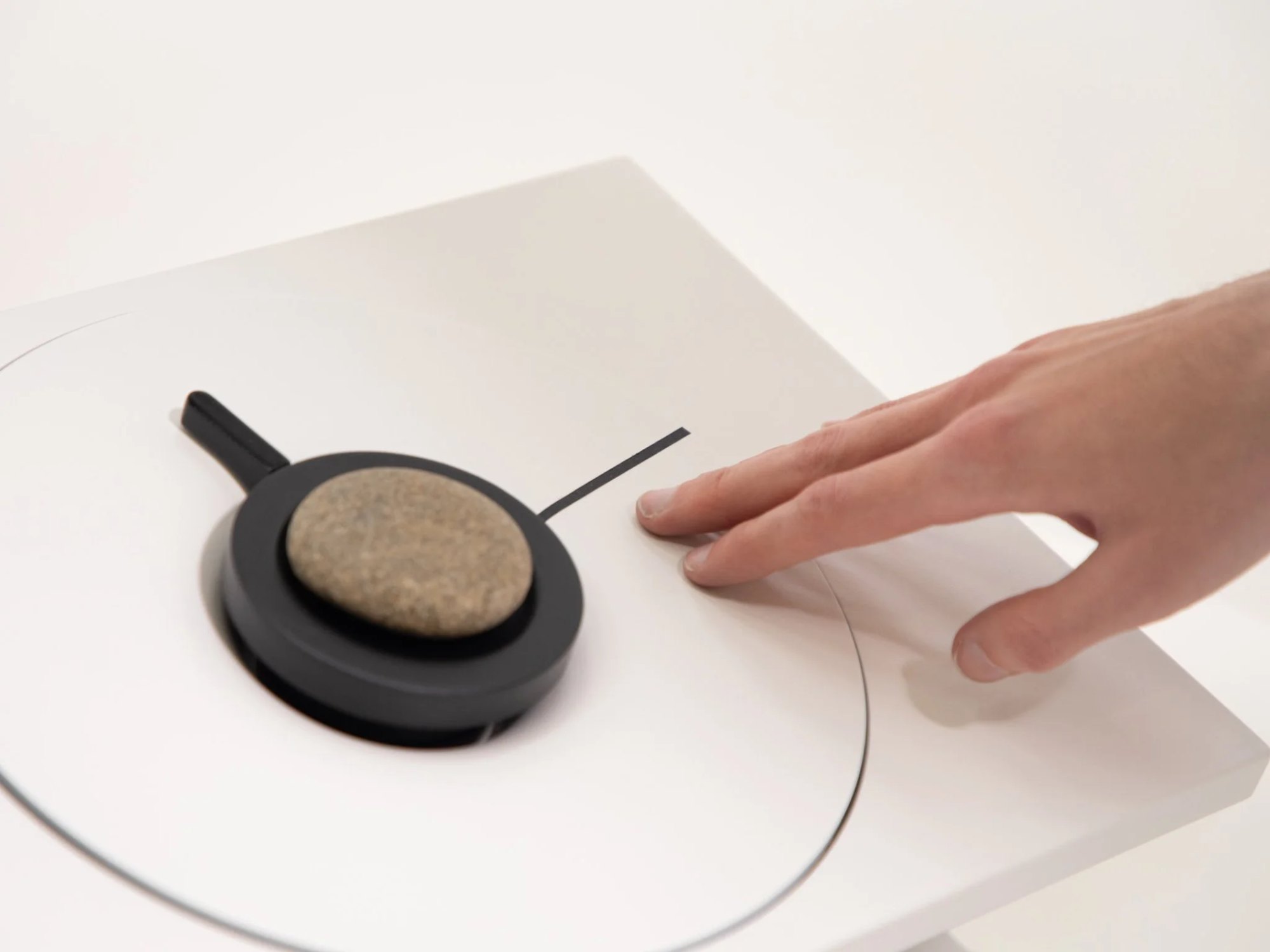
Soma is a music playback system centred on a physical tabletop device paired with a companion app. At the core of the design are ‘music stones’, physical objects that store uploaded music, with all playback interactions revolving around them. Functionally, the product system seeks to bridge physical and digital listening, combining action-driven interactions with the expansive library of digital music sources. Soma connects with the broader digital music ecosystem but intentionally separates its functions into three core components to create natural points of pause and reflectionm encouraging a more considered mode of music listening. First, the companion app links to existing digital music sources, allowing users to discover and transfer music onto the stones. Second, the stones act as physical vessels, storing the uploaded music, with each stone holding a body of music. Third, the playback device serves as the platform for listening and interaction. This separation is central to the design, the app facilitates discovery and curation, while the playback device focuses solely on music playback and listening. The music stone acts as the central touchpoint for interacting with the product. Placing it onto the central reader initiates playback, lifting it stops the music. Beyond the stones, playback controls are embedded in the object itself and how it presents to the user. Rotating the platter scrubs through the body of music. A concentric dial adjusts volume. Together, these interactions form a coherent design language, one where every gesture is at the human scale.
This project seeks to critically examine the values embedded within the design of playback technologies and how these values have influenced the ways in which music is now consumed. It aims to explore how physical product design could be used to reintroduce intention and presence into digital music listening. This was done through the creation of an product-based solution that proposes an alternate vision of what digital music interaction could be—if designed with a different set of values. The central proposition of this research is that by rethinking the design of playback technologies at the level of the object and the interface, it is possible to challenge passive patterns of use and foster a more intentional, human-centred relationship with digital music.
“The central proposition of this research is that by rethinking the design of playback technologies at the level of the object and the interface, it is possible to challenge passive patterns of use and foster a more intentional, human-centred relationship with digital music.”
Bio
As an emerging designer, my practice is grounded in a deep interest in how people relate to the everyday objects and systems that shape their lives, particularly those that have become so integrated, so invisible, that we rarely stop to question them. I have always been drawn to the spaces where design intersects with culture, and this project reflects that intersection. My relationship with music has been a long-standing one, and over time, I became increasingly aware of how passive my own listening habits had become, shaped by the design of the technologies I was using. This research began with a simple set of questions: What might it mean to truly listen again? And how might design support that kind of intentional experience?