
Growing Greener
by George Collins
Abstract
The centralised, profit-driven food system has caused environmental degradation, food insecurity, and a loss of cultural knowledge, disconnecting consumers from their food sources and nature. Food self-provisioning offers a sustainable alternative, but urbanisation in Australia restricts traditional gardening, while existing indoor systems overly focus on automation, overlooking the value of human interaction.
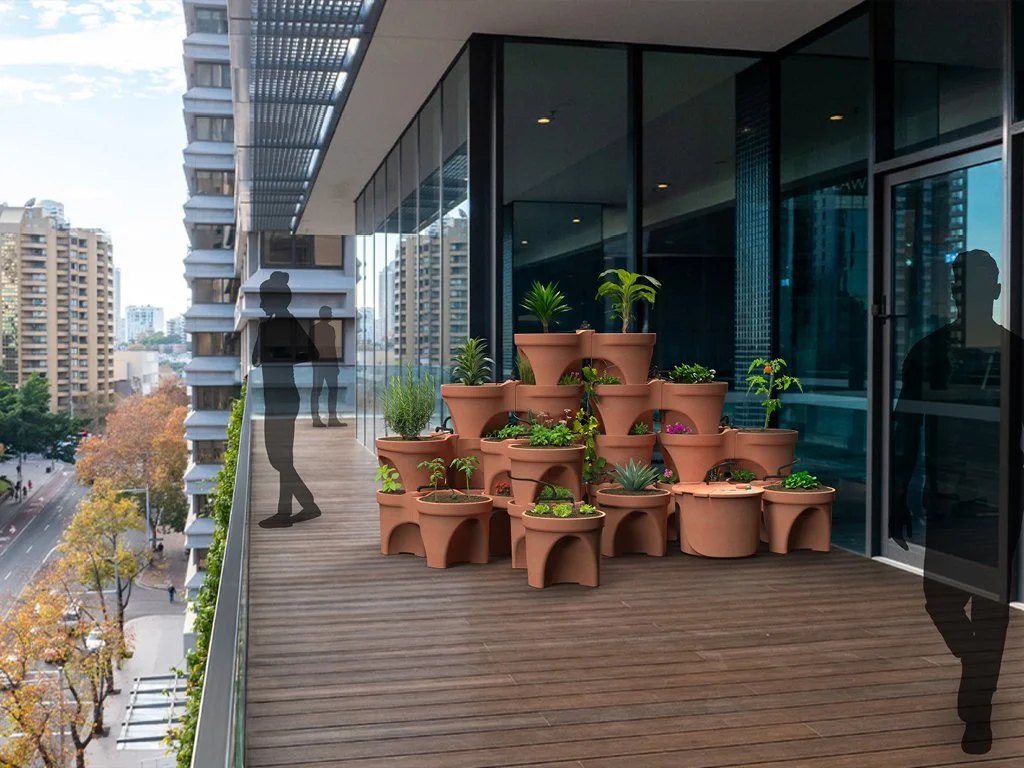
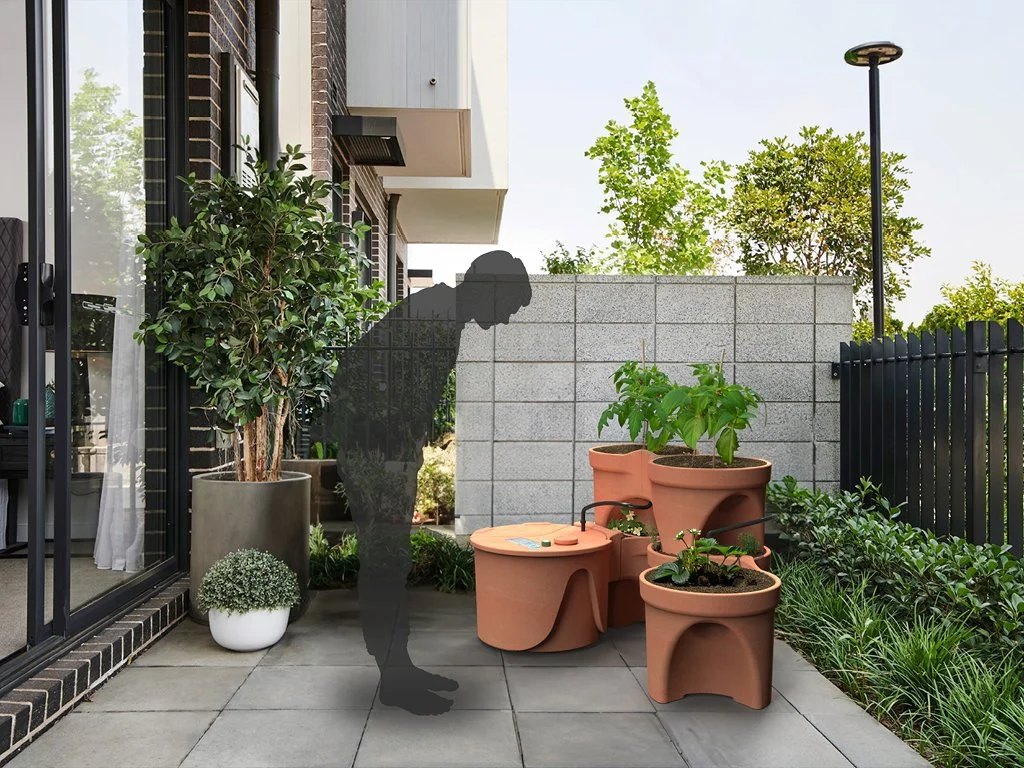
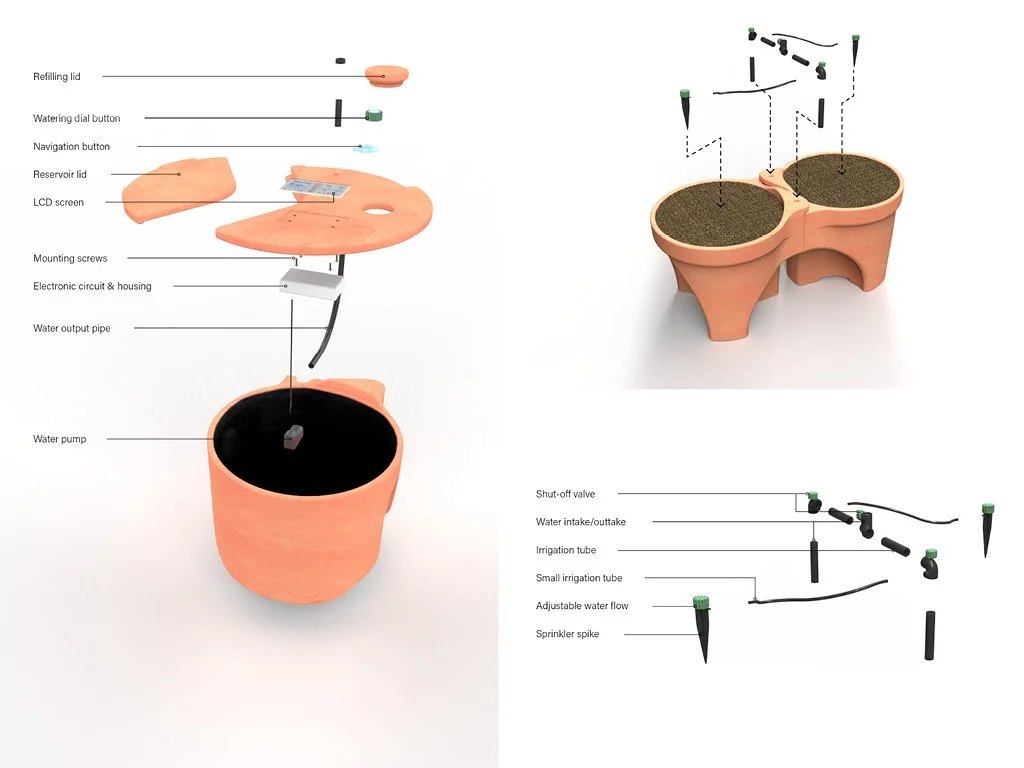
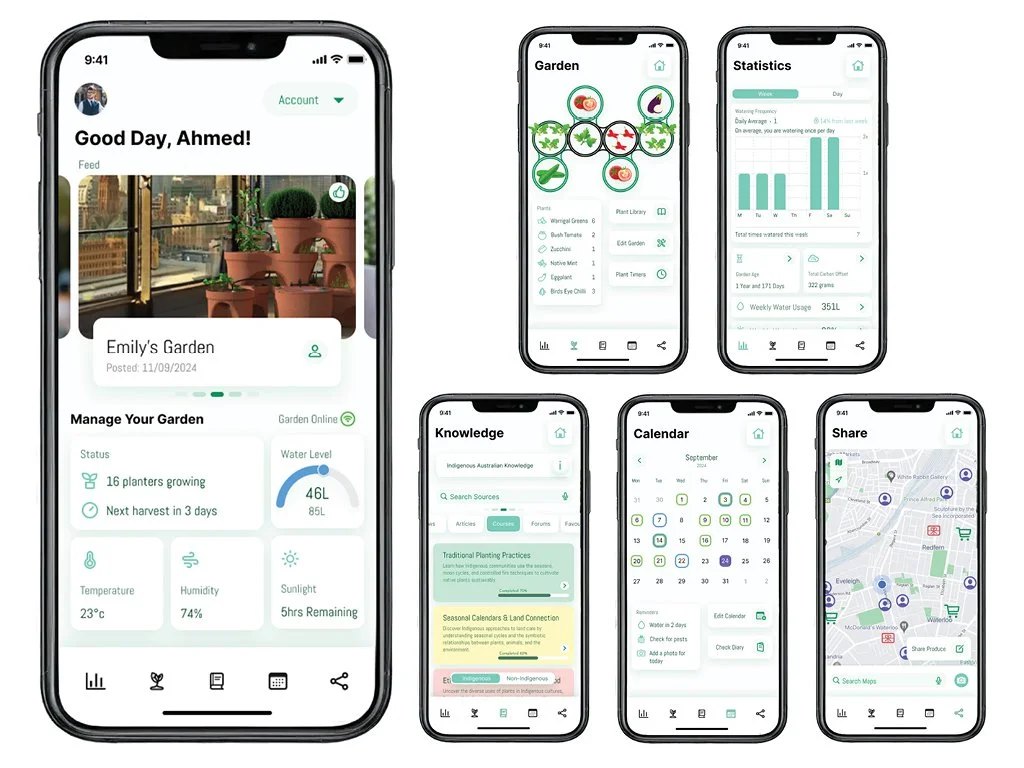
This project introduces Verdura, a modular semi-smart garden designed for urban Australian homes, blending traditional practices with emerging technologies. It provides an accessible, sustainable alternative to centralised food systems by fostering hands-on learning and promoting biodiversity by integrating native plants and Indigenous Australian knowledge. Complemented by a mobile app and online platform, the system encourages knowledge sharing, cultural preservation, and community resilience.
Flexible enough for various living spaces, the garden empowers users to grow food ethically and sustainably while fostering a deeper connection to nature. The project promotes a shift towards localised, community-focused food production by addressing environmental, social, and economic challenges.
The project aims to transform food sourcing and consumption behaviours through innovative design, creating more resilient systems and improving urban well-being. It envisions a future where sustainable practices strengthen individuals and communities in an increasingly urbanised Australia.
“Centralised, profit-driven food system has caused environmental degradation, food insecurity, and a loss of cultural knowledge, disconnecting consumers from their food sources and nature.”
Design Intent
Urban Australian homes face unique challenges in reconnecting with food production due to limited space and urbanisation. This project responds by reimagining food self-provisioning as a harmonious integration of sustainability, accessibility, and cultural significance. By prioritising hands-on engagement over automation, the modular semi-smart garden offers an experience that simplifies food cultivation and enriches the connection between users and their environment.
Current products in the market often prioritise automation or aesthetic appeal at the expense of meaningful user engagement. Many systems focus solely on efficiency, stripping away the educational and experiential value that food cultivation can provide. These products fail to address food production's broader environmental and cultural implications, leaving consumers disconnected from the growing process and the ecosystems they inhabit. In contrast, this design places the user at the centre of the experience, encouraging active participation in every growth stage. Integrating interactive elements and fostering a sense of ownership transforms food cultivation into a rewarding, educational, and culturally enriching activity.
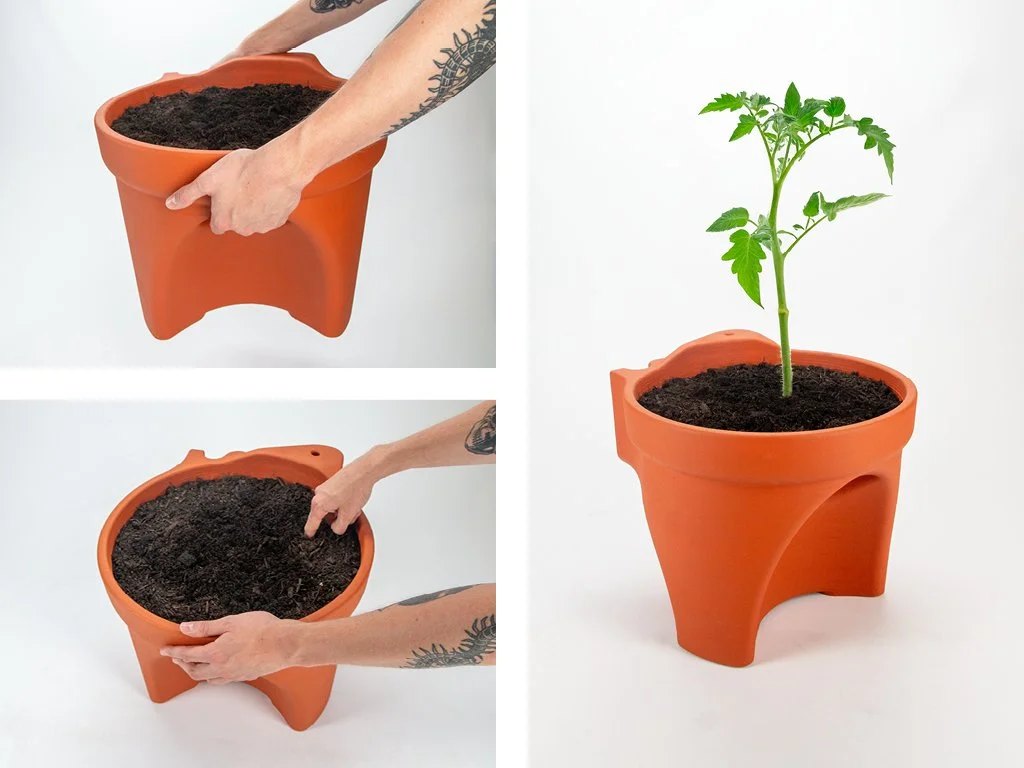
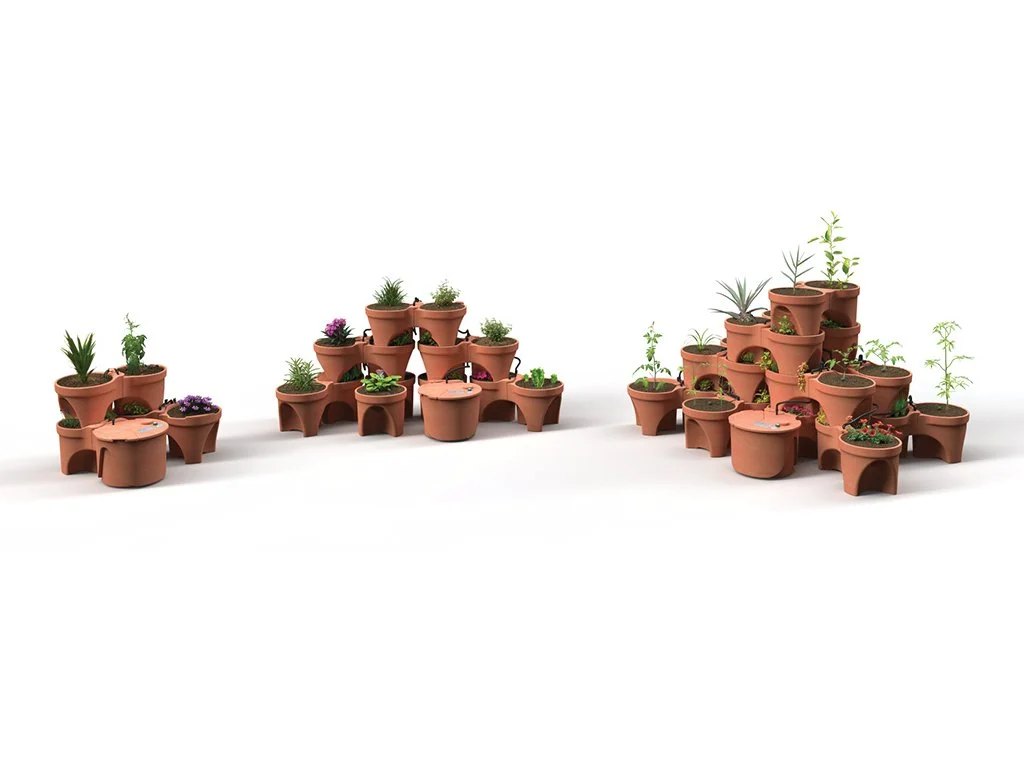
The design emphasises a thoughtful balance between tradition and technology. Modular components allow adaptability to different urban living spaces, encouraging personalised configurations that cater to diverse needs. Semi-smart features, such as intuitive irrigation systems, streamline the growing process for beginners while preserving the hands-on nature of gardening. The system fosters deeper interaction with plants, offering an accessible pathway to sustainable living.
Integrating native plants and Indigenous Australian knowledge elevates the garden beyond functionality, embedding cultural preservation and biodiversity into everyday life. The supporting mobile app and online platform extend this impact by sharing resources, promoting knowledge exchange, and building a sense of community resilience.
Through these elements, the design envisions a shift towards localised food systems that empower individuals to grow food ethically and sustainably. It addresses environmental and economic challenges and strengthens cultural and community ties. This project serves as a catalyst for rethinking urban food systems, fostering sustainable behaviours and resilient practices that align with the evolving needs of urban Australia.
“This design places the user at the centre of the experience, encouraging active participation in every growth stage. Integrating interactive elements and fostering a sense of ownership transforms food cultivation into a rewarding, educational, and culturally enriching activity.”
Bio
I am a product design honours student at the University of Technology Sydney, focusing on human-centred design and a commitment to creating products that contribute to a brighter future. With a Bachelor of Product Design and now Product Design Honours, I am deeply interested in the relationship between people and the objects they interact with and how these interactions can shape and influence daily life. I am passionate about designing sustainable products that enhance lives while preserving the meaningful connections and values that make the human experience truly significant.